
 Admin
Admin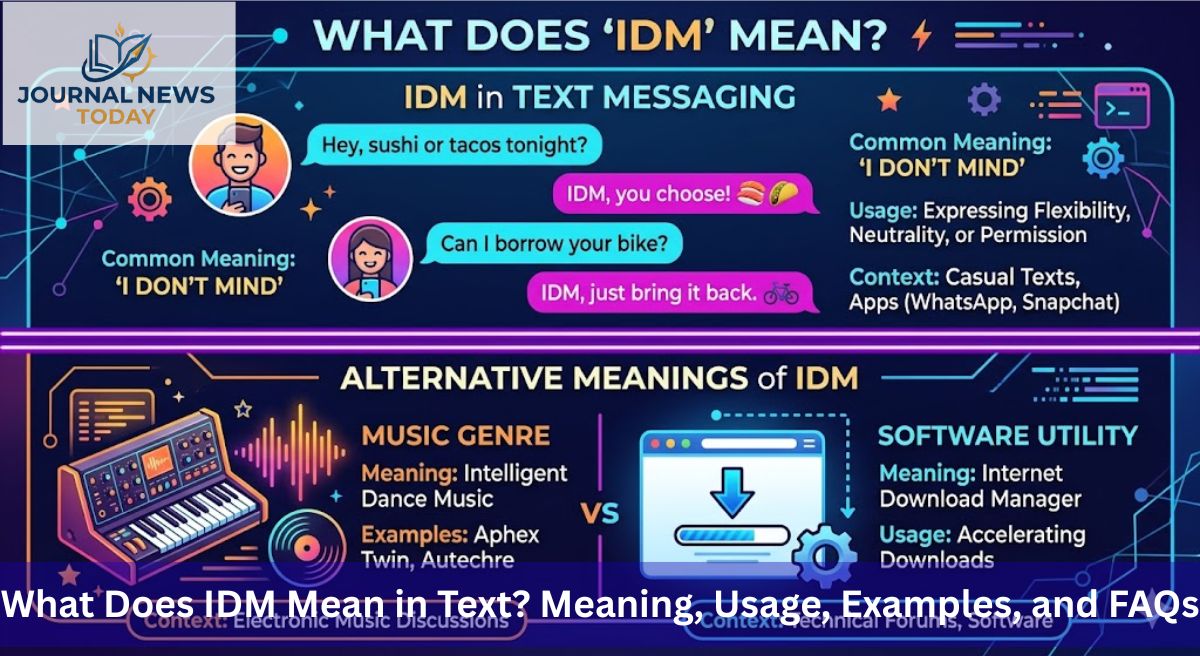
In today’s fast-paced digital world, abbreviations and slang dominate online communication. Whether you’re texting friends, chatting on social media, or commenting on posts, you’ve probably come across short forms that leave you wondering about their meaning. One such abbreviation is “IDM.” If you’ve ever paused mid-conversation, thinking, what does IDM mean in text, you’re not alone. This guide will walk you through everything you need to know about IDM, including its meanings, usage, context, and examples.
Understanding the Meaning of IDM in Text
The abbreviation IDM most commonly stands for “I Don’t Mind.” It’s a casual way to express that you’re okay with something or that you have no strong preference either way. People use it to keep conversations simple and efficient.
For example:
- “Do you want to watch a movie or go out?”
- “IDM, you choose.”
In this context, the person is signaling flexibility and openness, making IDM a friendly and easygoing response.
Why People Use IDM in Conversations
Digital communication often prioritizes speed and convenience. Instead of typing out full sentences, users prefer short and quick expressions. IDM fits perfectly into this trend.
There are a few key reasons why people use IDM:
- It saves time while typing
- It keeps conversations casual
- It avoids unnecessary explanations
- It reflects a relaxed attitude
Because of these benefits, IDM has become a popular abbreviation, especially among younger users and frequent texters.
Different Contexts Where IDM Is Used
Although IDM primarily means “I Don’t Mind,” its tone and implication can vary depending on the situation. Context plays a huge role in how it is interpreted.
Casual Conversations
In everyday chats with friends or family, IDM shows flexibility. It indicates that the person is happy with any option.
Group Planning
When making plans in a group, IDM can signal that someone is willing to go along with the majority decision.
Decision-Making Scenarios
If someone is asked to choose between options, responding with IDM means they trust others to decide.
Examples of IDM in Text Messages
To better understand how IDM works, here are some practical examples:
- “Should we order pizza or burgers?”
“IDM, both sound good.” - “Can I call you later tonight?”
“IDM, that’s fine.” - “Do you mind if I bring a friend?”
“IDM at all!”
These examples show how IDM keeps communication simple while conveying agreement or indifference.
IDM vs Similar Text Abbreviations
There are several other abbreviations similar to IDM, and it’s helpful to know the difference between them.
IDC (I Don’t Care)
IDC can sometimes sound harsher or more dismissive than IDM. While IDM is polite, IDC may come across as uninterested.
NVM (Never Mind)
NVM is used when someone wants to drop a topic, whereas IDM expresses acceptance.
IMO (In My Opinion)
IMO is used to share personal thoughts, while IDM indicates neutrality or lack of preference.
Understanding these differences helps you choose the right abbreviation depending on the tone you want to convey.
Tone and Emotion Behind IDM
One of the reasons IDM is so widely used is because it carries a neutral and positive tone. It doesn’t sound aggressive or dismissive, which makes it safe to use in most situations.
However, tone can still vary slightly depending on context:
- Friendly tone: “IDM 😊” suggests openness and warmth
- Neutral tone: “IDM” simply indicates no preference
- Slightly disinterested tone: If used repeatedly, it may suggest lack of engagement
Being mindful of tone ensures that your message is interpreted correctly.
Is IDM Always Polite?
Generally, IDM is considered polite and easygoing. It shows that you are flexible and willing to compromise. However, overusing IDM can sometimes give the impression that you’re not invested in the conversation.
For instance, if someone repeatedly says IDM without offering opinions, others might feel they are disengaged. To avoid this, it’s good to occasionally share your preferences as well.
IDM in Social Media and Online Platforms
IDM is not limited to text messages. It is also widely used across social media platforms, including chats, comments, and forums.
You might see IDM in:
- Instagram or Facebook comments
- WhatsApp group chats
- Online gaming discussions
- Reddit threads
Its versatility makes it a universal shorthand that works across different platforms and audiences.
When Not to Use IDM
Although IDM is convenient, there are situations where it may not be appropriate.
Professional Communication
In formal emails or workplace chats, it’s better to use complete phrases like “I don’t mind” instead of abbreviations.
Important Decisions
If a decision requires your input, responding with IDM may seem careless or uninterested.
Sensitive Conversations
In serious discussions, using abbreviations might come across as too casual or dismissive.
Choosing the right context for IDM helps maintain clear and respectful communication.
How IDM Reflects Modern Communication Trends
The popularity of IDM highlights how language is evolving in the digital age. People prefer quick, efficient ways to communicate without losing meaning.
This trend includes:
- Shortened words and phrases
- Use of emojis for expression
- Informal tone in everyday communication
IDM is just one example of how digital culture shapes the way we interact with each other.
Variations and Related Expressions
While IDM is the most common abbreviation, there are other ways people express similar ideas.
Some alternatives include:
- “Up to you”
- “I’m okay with anything”
- “Doesn’t matter to me”
- “I’m fine either way”
Each of these conveys a similar message but may differ slightly in tone or formality.
Common Misunderstandings About IDM
Despite its simplicity, IDM can sometimes be misunderstood.
It Doesn’t Mean “I Don’t Know”
Some people confuse IDM with not knowing something, but it actually refers to having no preference.
It’s Not Negative
Unlike IDC, IDM is not meant to sound rude or dismissive.
It Doesn’t Always Mean Agreement
While IDM shows acceptance, it doesn’t necessarily mean strong agreement—it simply means neutrality.
Understanding these nuances helps avoid confusion in conversations.
Tips for Using IDM Effectively
To make the most of IDM in your communication, consider these tips:
- Use it in casual conversations for a friendly tone
- Avoid overusing it to prevent sounding disengaged
- Pair it with emojis for warmth when appropriate
- Be mindful of context and audience
These simple strategies ensure that your messages are clear and well-received.
The Role of Context in Interpreting IDM
Context is everything when it comes to abbreviations like IDM. The same word can carry slightly different meanings depending on the situation, tone, and relationship between speakers.
For example:
- Between close friends, IDM feels natural and relaxed
- In new conversations, it may seem slightly distant
- In group chats, it signals cooperation
Paying attention to context ensures accurate interpretation and better communication.
Conclusion
So, what does IDM mean in text? In most cases, it stands for “I Don’t Mind,” a simple and friendly way to express flexibility and openness. It has become a staple in modern digital communication thanks to its convenience and neutral tone.
While IDM is easy to use and widely understood, it’s important to consider context, tone, and frequency. When used appropriately, it can make your conversations smoother and more relaxed. However, balancing it with more expressive responses ensures you stay engaged and clear in your communication.
FAQs
1. What does IDM stand for in texting?
IDM stands for “I Don’t Mind.” It is used to show that you have no preference or are okay with a suggestion.
2. Is IDM rude or polite?
IDM is generally polite and friendly. It shows flexibility rather than disinterest.
3. Can IDM have other meanings?
While “I Don’t Mind” is the most common meaning, IDM can occasionally have different meanings in specific contexts, though this is rare in texting.
4. When should I use IDM?
You can use IDM in casual conversations, group chats, or when you want to show you’re okay with any option.
5. Is IDM appropriate for professional communication?
No, it’s better to use full phrases like “I don’t mind” in formal or professional settings.
6. What is the difference between IDM and IDC?
IDM means “I Don’t Mind” and sounds polite, while IDC means “I Don’t Care” and can sound dismissive.


