
 Admin
Admin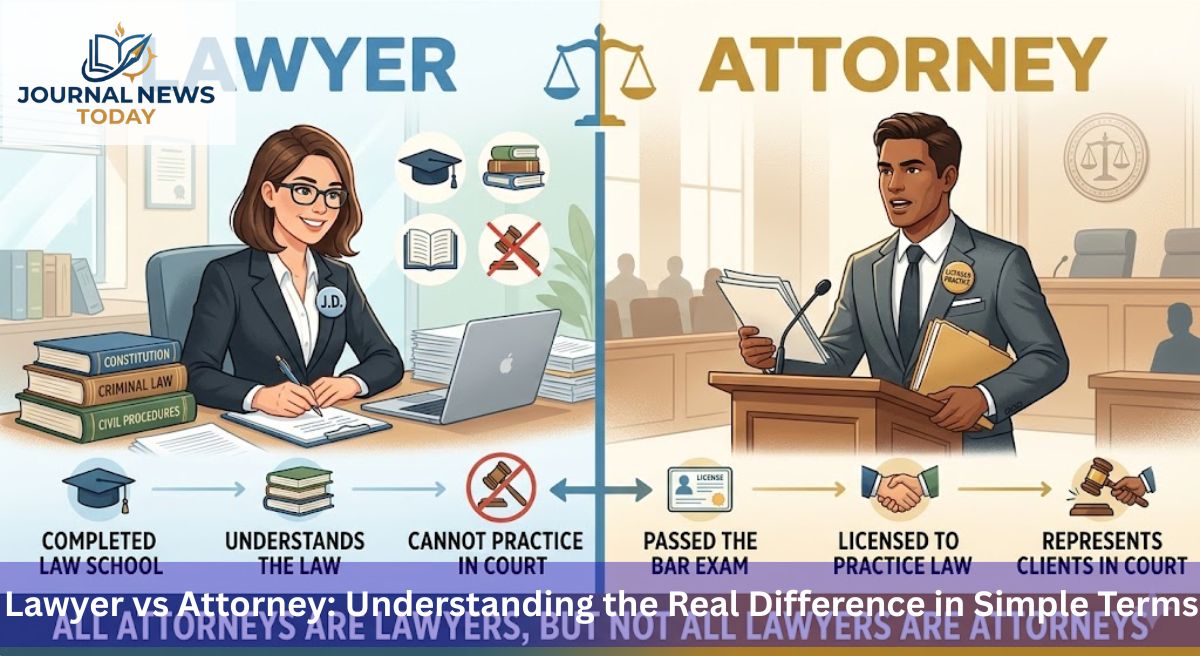
The legal world is often confusing for people who are not familiar with its terminology. Two words that are frequently used interchangeably are lawyer vs attorney. At first glance, they may seem identical, and in many everyday conversations, people treat them as the same thing. However, there are subtle differences in meaning, usage, and legal authority depending on the country and context. Understanding these differences is important, especially if you ever need legal help or are simply trying to make sense of legal discussions in media, news, or real life situations.
Both professionals are involved in law, legal systems, and advising clients, but their exact roles can vary. This article breaks down the distinctions in a clear, practical way so that you can understand how these terms are used, where they overlap, and why the distinction still matters today.
What Does the Term Lawyer Mean?
A lawyer is generally defined as someone who has studied law and received legal education. This means they have completed a law degree and are trained in legal principles, systems, and procedures. A lawyer may offer legal advice, study laws, draft documents, and help individuals or organizations understand their rights and responsibilities.
However, in many jurisdictions, being a lawyer does not automatically mean a person can represent clients in court. A lawyer may choose different career paths, such as legal consulting, corporate advisory work, academic research, or policy development. The term is broad and focuses mainly on legal education and knowledge rather than courtroom authority.
What Does the Term Attorney Mean?
An attorney is a legal professional who is authorized to represent clients in a court of law. In countries like the United States, an attorney is someone who has not only studied law but has also passed the bar examination and received a license to practice law officially.
This means an attorney can appear in court, argue cases, defend clients, and act on their behalf in legal proceedings. They can also perform the same duties as a lawyer, such as giving legal advice, drafting contracts, and preparing documents, but their defining feature is their legal authority to represent others in court.
The word “attorney” is often shortened from “attorney-at-law,” which clearly emphasizes their role as a legal representative. In everyday usage, especially in the United States, people often use “attorney” to refer specifically to practicing lawyers who are licensed.
The Key Difference Explained
The main distinction between these two terms lies in legal authority and practice rights. While both are trained in law, not every lawyer is an attorney, but every attorney is a lawyer.
A lawyer is someone educated in law, while an attorney is someone legally empowered to act on behalf of others in legal proceedings. This is the most important difference between the two.
In practical terms:
- A lawyer may advise you on legal matters.
- An attorney can represent you in court.
However, in many countries and in informal usage, the distinction is not strictly followed, and the two terms are often used as synonyms. This can create confusion, especially in international contexts where legal systems differ.
Education, Licensing, and Professional Requirements
Becoming a legal professional requires extensive education and training. Typically, the journey begins with completing a law degree, which covers subjects like constitutional law, criminal law, civil law, and legal ethics. After completing formal education, individuals must often pass a licensing exam, depending on the country or state they wish to practice in.
For someone to become an attorney in jurisdictions like the United States, passing the bar exam is essential. This exam tests knowledge of legal principles and ensures that the candidate is qualified to practice law professionally. In contrast, the term lawyer does not always require passing a professional licensing exam in its strict definition. It primarily refers to the academic qualification in law, although in practice, many lawyers also become licensed attorneys.
Courtroom Representation and Legal Practice
One of the most important practical differences between a lawyer and an attorney is courtroom representation. Attorneys have the legal authority to represent clients before judges, argue cases, present evidence, and defend legal positions. They act as official representatives of individuals, companies, or organizations in legal disputes.
Lawyers, on the other hand, may not always have this authority depending on their licensing status. Some lawyers work behind the scenes, preparing legal documents, researching cases, or advising clients without ever stepping into a courtroom.
This distinction highlights how the legal profession is divided into different roles, each contributing to the justice system in different ways. While courtroom attorneys are often more visible, lawyers working in advisory roles are equally important in ensuring legal accuracy and compliance.
Regional Differences in Usage
The meaning of lawyer vs attorney can vary depending on the country. In the United States, the distinction is more defined because of the bar licensing system. However, in countries like the United Kingdom, India, Pakistan, and others with common law systems, different terms such as solicitor, barrister, or advocate may be used instead.
In everyday language across many regions, people often use “lawyer” as a general term for anyone working in law, regardless of their specific role. Meanwhile, “attorney” is more commonly used in American English and legal documentation. Because of these variations, the confusion between the two terms is understandable.
When You Might Need a Lawyer or an Attorney
If you are dealing with legal issues, knowing whether you need a lawyer or an attorney depends on the situation. For general legal advice, contract review, or understanding your rights, a lawyer may be sufficient. They can guide you through legal documents and help you make informed decisions.
However, if your situation involves court proceedings, lawsuits, criminal charges, or formal legal representation, you will need an attorney who is licensed to represent you in court. They will act on your behalf, present your case, and navigate the legal system for you.
In most real-world situations, especially in countries with strict licensing systems, professionals often perform both roles, meaning your legal representative will typically be both a lawyer and an attorney.
Common Misconceptions
One of the biggest misconceptions is that lawyer vs attorney are completely different professions. In reality, they overlap significantly. Another misunderstanding is that attorneys are more skilled or knowledgeable than lawyers. This is not necessarily true, as both go through similar educational paths.
Another common belief is that all lawyers automatically become attorneys, which is not always the case. Licensing requirements determine whether a law graduate can practice in court or not. Additionally, some people assume that the distinction is universal, but in many countries, the difference is minimal or purely linguistic.
Conclusion
The comparison between a lawyer vs attorney often leads to confusion, but the difference becomes clear when you focus on education, licensing, and legal authority. A lawyer is someone who has studied law and understands legal systems, while an attorney is someone who is licensed to represent clients in court.
Although the terms are frequently used interchangeably in everyday conversation, their technical meanings are still important in legal practice. Knowing the difference can help you make better decisions when seeking legal assistance and improve your understanding of how the legal system works. In the end, both roles are essential to the justice system.


