
 Admin
Admin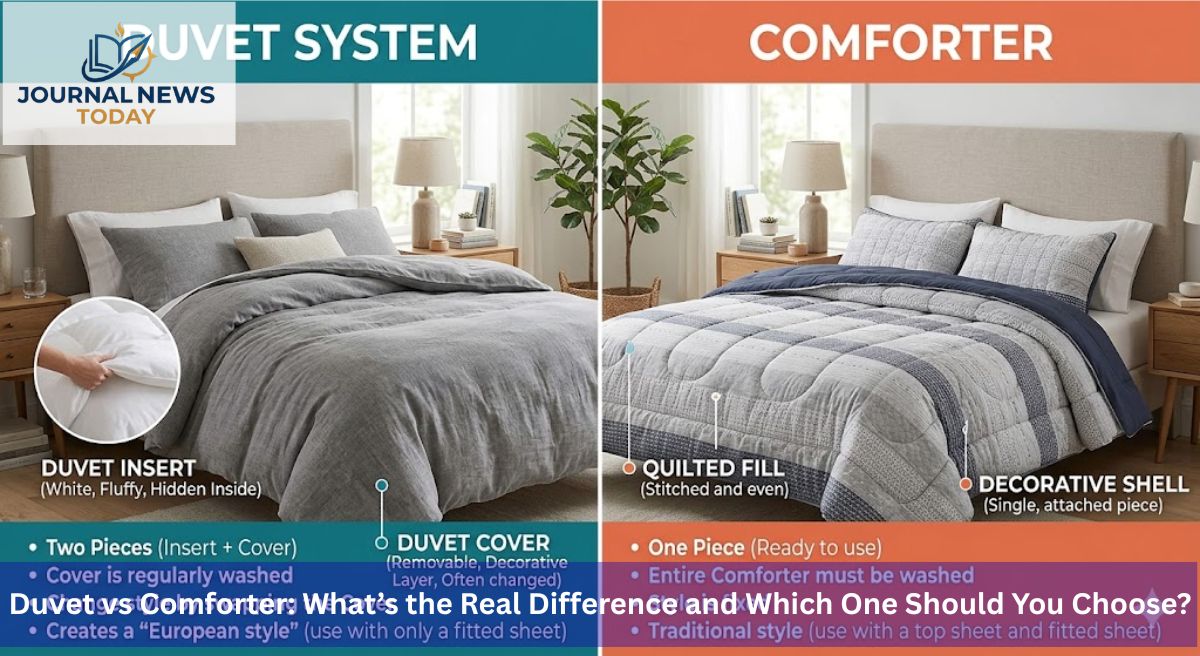
Choosing the right bedding can make a huge difference in how well you sleep. Two of the most commonly confused bedding items are Duvets vs Comforters. At first glance, they may look similar—both are thick, fluffy layers designed to keep you warm—but they serve slightly different purposes and come with their own pros and cons.
If you’ve ever wondered about the difference between a duvet vs comforter, this guide will break everything down in simple terms so you can make the best choice for your comfort, lifestyle, and budget.
What Is a Duvet?
A duvet is a soft, flat bag filled with materials like down, feathers, wool, or synthetic fibers. It is designed to be used with a removable cover called a duvet cover.
Think of a duvet like a pillow and the duvet cover like a pillowcase. The insert (duvet) provides warmth, while the cover adds style and protection.
Key Features of a Duvet
- Comes as an insert plus a separate cover
- Usually plain white or neutral in color
- Easy to wash because only the cover needs frequent cleaning
- Available in different warmth levels (light, medium, heavy)
What Is a Comforter?
A comforter is a thick, quilted blanket filled with synthetic fibers or down. Unlike a duvet, it comes as a single, ready-to-use piece and does not require a cover.
Comforters are often sold as part of bedding sets and come in various colors, patterns, and designs.
Key Features of a Comforter
- One-piece bedding item
- Already styled and decorative
- No additional cover required
- Needs full washing when dirty
Duvet vs Comforter: The Core Differences
Understanding the differences between a duvet and a comforter helps you decide which one fits your needs better.
1. Design and Structure
A duvet consists of two parts: the insert and the cover. A comforter is a single, stitched piece with filling evenly distributed inside.
2. Ease of Cleaning
Duvets are easier to maintain because you can simply remove and wash the cover. Comforters, on the other hand, require washing the entire piece, which can be bulky and time-consuming.
3. Style and Appearance
Comforters often come in attractive designs and patterns, making them ideal for people who want a ready-made look. Duvets allow more flexibility since you can change covers to match your room decor.
4. Warmth and Versatility
Duvets are more versatile because you can swap inserts depending on the season. Comforters usually offer a fixed level of warmth.
5. Cost Consideration
A duvet setup may cost more initially because you need both the insert and the cover. Comforters are often more budget-friendly upfront.
Pros and Cons of Duvets
Advantages
- Easy to clean (wash only the cover)
- Highly customizable with different covers
- Suitable for all seasons with interchangeable inserts
- Long-lasting if maintained properly
Disadvantages
- Can shift inside the cover if not secured properly
- Requires setup (putting the cover on can be tricky)
- Usually more expensive initially
Pros and Cons of Comforters
Advantages
- Simple and convenient (no extra cover needed)
- Ready-to-use with stylish designs
- Often more affordable
- Great for quick bedroom setups
Disadvantages
- Harder to clean due to bulkiness
- Limited flexibility in warmth
- Design cannot be easily changed
Which One Is Better for You?
The choice between a duvet vs comforter depends on your personal preferences and lifestyle.
Choose a Duvet If:
- You want flexibility in style and warmth
- You prefer easy maintenance
- You like changing your room decor frequently
Choose a Comforter If:
- You want something simple and ready to use
- You prefer a fixed design
- You don’t want the hassle of changing covers
Seasonal Considerations
Your local climate plays an important role in choosing between a duvet and a comforter.
In Warmer Climates
A lightweight duvet with a breathable cover is often a better choice. You can remove the cover or switch to a lighter insert during hot months.
In Colder Climates
A heavy duvet or a thick comforter can both work well. However, duvets provide more flexibility if temperatures vary.
Maintenance and Care Tips
Proper care can extend the life of your bedding.
For Duvets
- Wash the cover regularly (once every 1–2 weeks)
- Air out the insert occasionally
- Dry clean or wash the insert only when necessary
For Comforters
- Wash every few weeks or as needed
- Use a large-capacity washing machine
- Consider using a top sheet to keep it cleaner longer
Style and Bedroom Aesthetics
Your bedding is a big part of your bedroom’s look.
- Duvets are ideal for minimalist and modern designs because you can switch covers easily.
- Comforters are perfect for coordinated sets and traditional styles.
If you enjoy redecorating, a duvet gives you more creative freedom. If you prefer consistency, a comforter is the better option.
Durability and Longevity
Duvets tend to last longer because the cover protects the insert from dirt and wear. You can replace just the cover instead of the entire bedding.
Comforters may wear out faster since they are directly exposed to daily use and frequent washing.
Common Mistakes to Avoid
When choosing between a duvet vs comforter, people often make these mistakes:
- Buying the wrong size for their bed
- Ignoring climate and seasonal needs
- Choosing style over comfort
- Not checking the filling material
Always consider both comfort and practicality before making a decision.
FAQs
1. Is a duvet warmer than a comforter?
It depends on the filling. Duvets can be warmer because you can choose heavier inserts, but comforters can also be very warm if thickly filled.
2. Do I need a duvet cover?
Yes, a duvet is typically used with a cover to protect it and add style.
3. Can I use a comforter without a top sheet?
Yes, but it may get dirty faster. A top sheet helps keep it clean.
4. Which is easier to clean?
A duvet is easier to clean because you only need to wash the cover regularly.
5. Are duvets more expensive?
They can be more expensive initially since you need both the insert and the cover.
6. Can I use a duvet like a comforter?
Yes, but it’s not recommended without a cover, as it can get dirty quickly.
7. Which is better for allergies?
Both can be suitable if made with hypoallergenic materials. Duvets have an advantage because covers can be washed frequently.
8. Do hotels use duvets or comforters?
Most hotels use duvets with covers because they are easier to clean and maintain.
Final Thoughts
When it comes to duvet vs comforter, there is no one-size-fits-all answer. Both options provide warmth and comfort, but they cater to different needs.
A duvet offers flexibility, easy maintenance, and long-term value, while a comforter provides simplicity, affordability, and convenience. Your choice should depend on your lifestyle, climate, and how much effort you’re willing to put into maintaining your bedding.
By understanding the differences and considering your personal preferences, you can create a sleeping environment that is both comfortable and stylish.


